CUSTOMER SUCCESS STORY:
How WCC reduced onboarding emails by 92%
-
5,000+
employees
-
632,000
citizens
-
750+
square miles served
-
£850m
annual budget
WCC streamlined employee lifecycle processes with Hornbill
Warwickshire County Council joined up its starters, leavers and movers (SLAM) processes with Hornbill—reducing administration, improving employee readiness and strengthening access governance.
RESULTS
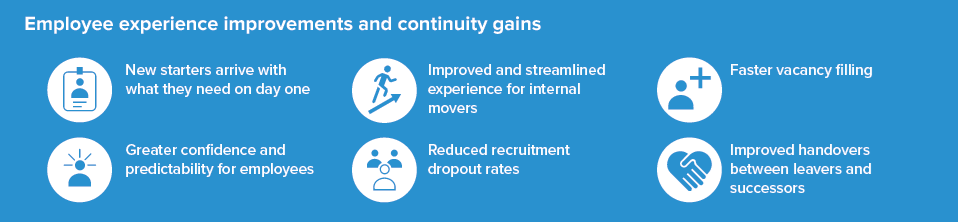
Less administration. More time to deliver.
WCC connected employee lifecycle processes across teams, reducing administration and improving visibility, coordination and access governance.
-
92% fewer onboarding emails
-
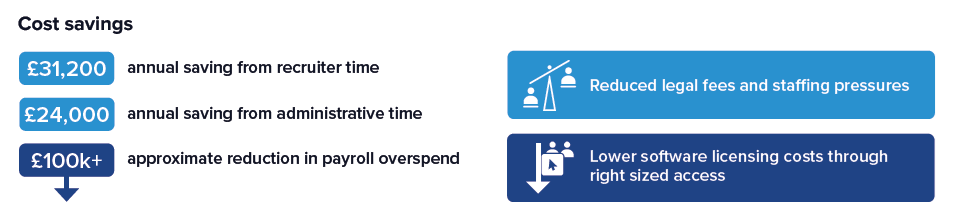
3,675 hours saved annually, across one 15-person team.
-
A further 15,000 hours of annual savings forecast through the 2026/27 roadmap.
-
8.42 hours average SLAM ticket time. Reduced from a baseline previously measured in weeks.
-
Fewer stalled requests
-
Stronger access governance
-
Lower software licensing costs
CUSTOMER INSIGHT
How they improved experience and efficiency
A better employee lifecycle process starts with understanding the whole journey
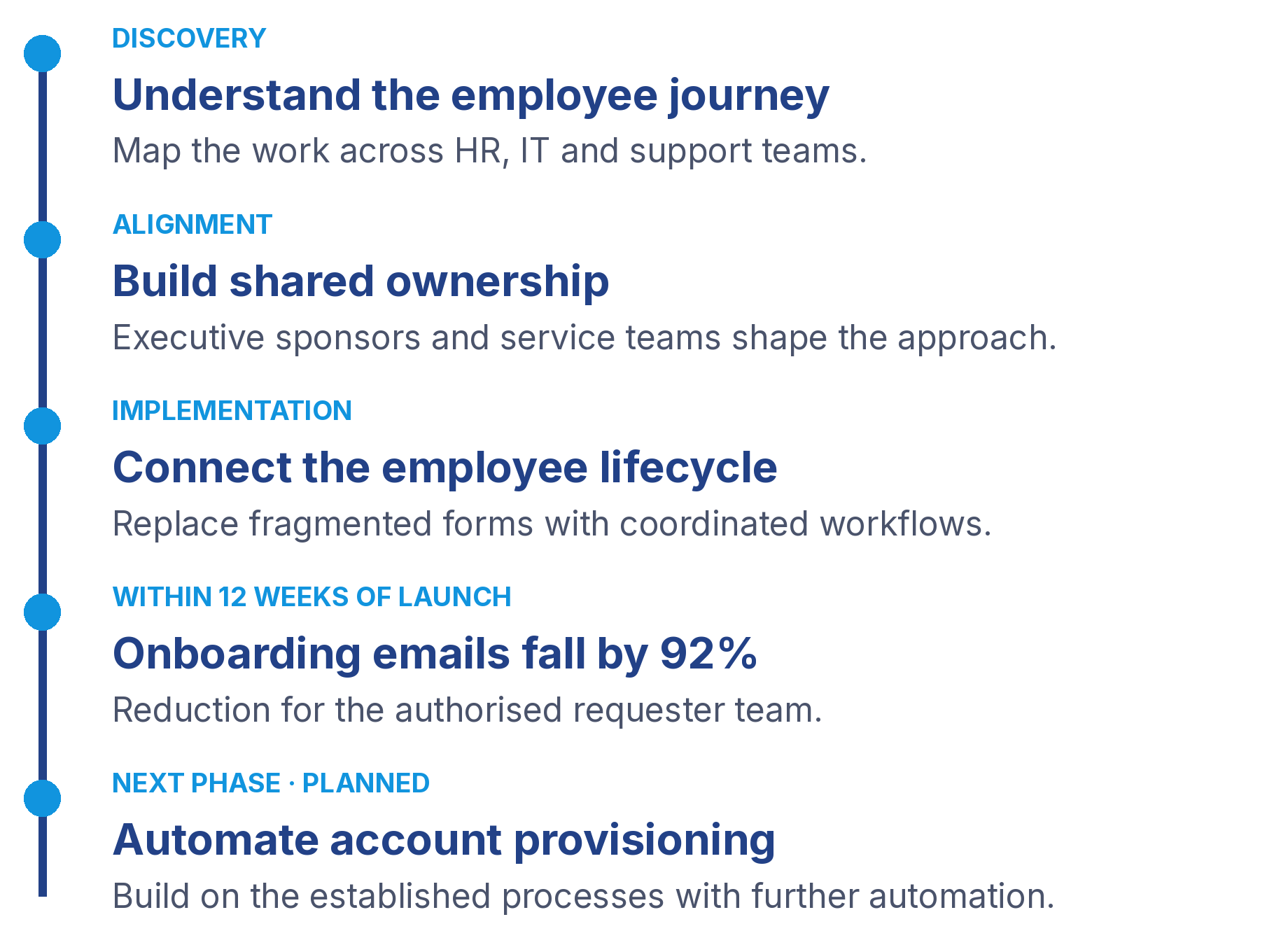
Warwickshire County Council began by understanding how work moved between people and teams. An extended discovery phase brought HR, IT and other stakeholders together to establish what information each service needed, when it was needed and who owned each step.
With directors participating alongside operational colleagues, the council built shared understanding and support for change. Hornbill then brought the redesigned processes together through coordinated digital workflows, replacing redundant manual forms and making progress visible across service boundaries.
Hornbill connected activities through digital workflows, giving teams clearer ownership, better visibility and more consistent information.

What WCC needed
From messy processes to clean journeys
Challenges
Starters, leavers and movers processes had evolved independently across service teams, creating a largely manual employee journey. Managers and employees repeated information across multiple documents, while email and manual handovers made coordination difficult.
- Onboarding involved up to 17 separate documents.
- Administration added around five hours per hire.
- Missing information prompted repeated emails and rework.
- Equipment and access delays affected day-one readiness.
- Inherited permissions and inconsistent access changes created governance risks.
Requirements
The council needed a coordinated approach that connected teams around the complete employee journey. It also needed clearer ownership, consistent information and stronger access controls, with a foundation for future automation.
- Capture information once and share it with the teams that need it.
- Coordinate tasks and handovers across HR, IT and other services.
- Make ownership and request progress visible.
- Apply appropriate processes for starters, movers and leavers.
- Strengthen role-based access governance and support ongoing improvement.

THE JOURNEY
Understand the work. Connect the teams. Improve the outcome.
WCC invested in discovery to understand its existing employee processes and the people operating them. With executive sponsorship and cross-team involvement, it consolidated redundant forms into coordinated Hornbill workflows.
Within 12 weeks of launch, onboarding-related emails to the authorised requester team had fallen by 92%, establishing a foundation for further improvement and automation.
"Now that the processes are established, automation becomes straightforward. We’re really looking forward to the next phase."
Emily Johnson, Senior Project Manager, Warwickshire County Council
Why WCC chose Hornbill
WCC identified Hornbill as a way to connect its employee lifecycle processes across teams. Its ability to consolidate forms, coordinate work and support controlled self-service addressed several challenges uncovered during discovery.
1. Simpler information capture
Hornbill brought the information from multiple onboarding documents into one coordinated form, reducing repetition and the need to chase missing details.
2. Workflows that connect teams
Parallel tasks and decision-based workflows allowed different teams to complete their activities within a shared process, eliminating manual handovers.
3. A foundation for further automation
Hornbill enabled WCC to establish consistent, connected processes, creating a foundation for future automation and efficiency gains.
"Overall, it’s been a massive success. We’ve seen benefits across all types of Hornbill requests using the new SLAM process.”
Emily Johnson, Senior Project Manager, Warwickshire County Council